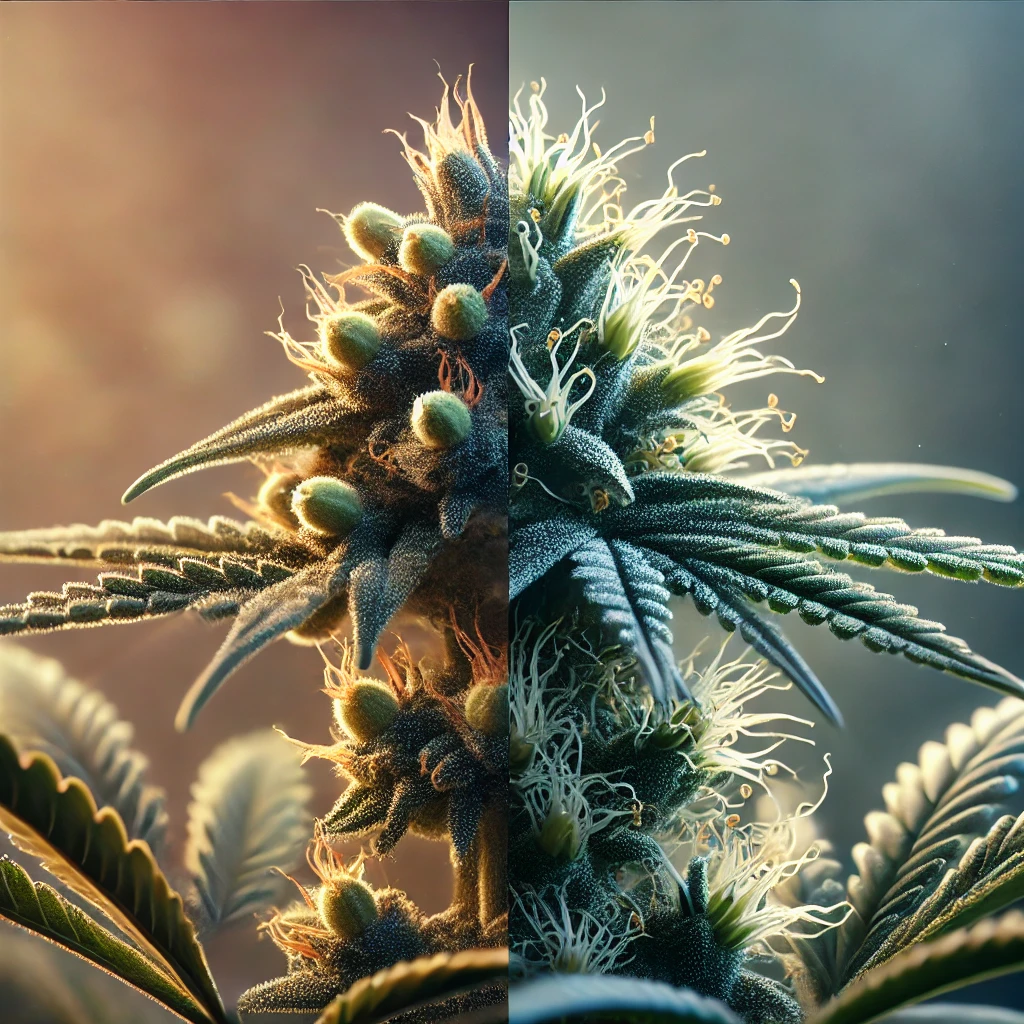
What are the differences between CBD and THC?
When talking about hemp-derived compounds, two names often come up: CBD and THC. Both are part of the same chemical family, but their effects, uses and legal regulation are very different. What makes them so different? Understanding how they act in the body, what applications are attributed to them, and what the scientific evidence says can help you make more informed and confident decisions. And to do this, the first thing is to observe how they relate to your own biological system. How they act in the body: mechanisms of action Before talking about effects or uses, it is essential to understand what happens in your body when they come into contact with CBD or THC. Both act through an internal system called the endocannabinoid, which functions as a regulatory network. That is, as a set of “switches” that help maintain the balance between functions as diverse as mood, appetite or sleep. Let’s see what role each one plays. The Endocannabinoid System and Its Regulatory Role This system is present in your body from birth and fulfills key functions for your general well-being. It is made up of receptors (called CB1 and CB2), which act as sensors in different parts of the body. CB1s are primarily found in the brain, while CB2s are found in peripheral organs, the immune system, and tissues such as the skin. Cannabinoids like THC and CBD bind to these receptors in different ways, and that’s where the big difference begins. While one activates them directly, the other modulates them gently. That interaction sets the tone for its effects. THC and its direct effect on brain receptors THC (tetrahydrocannabinol) binds directly to CB1 receptors located in the brain. In doing so, it activates them as if it were pressing buttons that temporarily modify the communication between neurons. This can translate into changes in the perception of time, intense sensations or alterations in immediate memory. According to research such as that of Stella (2023), this activation gives it some beneficial potential, but it also makes its effects stronger and that is why it needs greater medical and expert control when used for these purposes. In young people or people with a certain predisposition, it can generate cognitive or emotional side effects that should be known in advance. CBD and its indirect influence Cannabidiol (CBD), on the other hand, does not directly activate these receptors. What it does is something more subtle: it modulates them. It is what experts call a negative allosteric modulator. In simple words, it slightly changes the shape of the receptor so that its response to other substances is more balanced. In addition, CBD interacts with other receptors such as TRPV1 (related to pain perception and temperature) or 5-HT1A (linked to emotional regulation and serotonin). This ability to influence several points at once could explain why its role in relieving pain, anxiety, or even cell protection is being studied (Blebea et al., 2024). Effects on the body: what the evidence shows With the mechanisms clear, we can now talk about its effects. The differences between CBD and THC are not only seen in how they work, but also in the changes they produce on a physical, emotional, and cognitive level. This is where science offers valuable guidance. Cognitive and emotional changes associated with THC Studies in humans and animals have shown that THC alters the activity of brain areas such as the hippocampus and prefrontal cortex (Stella, 2023). These regions are involved in memory, judgment, and emotional control. As a result, THC can lead to temporary difficulties in working memory, decreased clarity when making decisions, or even mood variations. Although some people seek it precisely for these effects, they can also pose risks, especially when the amount or context in which it is used is unknown. That is one of the reasons why its regulation is stricter. Regulatory Effects of CBD on Mood, Pain, and Sleep CBD has been studied from a different perspective. As it does not generate psychoactive effects, its ability to modulate states such as anxiety or stress without interfering with mental lucidity has been explored (Blessing et al., 2015). In addition, research links it to potential anti-inflammatory and antioxidant properties that could be useful for the management of physical discomfort (Atalay et al., 2019). In terms of sleep, studies such as that of Rojas-Valverde (2021) have observed that CBD could promote rest without inducing artificial sleepiness. In other words, it would not be about sleeping more, but about sleeping better, naturally and without affecting your consciousness. This set of possible effects has made it an attractive option for those who seek to accompany their daily well-being. Safety, tolerance and possible risks Talking about cannabinoids not only implies knowing their benefits, but also their possible adverse effects. Understanding what their tolerance and safety levels are helps you better assess whether they’re right for you. Safety Profile of Cannabidiol (CBD) One of the reasons why CBD has gained popularity is that it is generally safe. In the few cases where there are adverse reactions, they are usually transitory: feeling tired, mild sleepiness or digestive discomfort (Blebea et al., 2024). It is also relevant that no risks of dependence or negative effects on memory have been identified. However, like any active substance, it can interfere with certain medications or health conditions. Therefore, if you plan to incorporate CBD into your routine, it is advisable to do so with professional supervision, especially if you are already under treatment or have a medical condition. Risks associated with tetrahydrocannabinol (THC) use The case of THC requires more attention. When used repeatedly, you can develop tolerance (i.e., needing higher and higher amounts to feel its effects) and, in some cases, psychological dependence. Research such as that of Stella (2023) also warns about its possible impact on brain development in specific cases. For all these reasons, its legal application is restricted to very specific medical contexts and always under specialized evaluation. Plant origin and differences in the